
FASCIA 101
The fascial tissue is equally distributed throughout the entire body, enveloping, interacting with, and permeating blood vessels, nerves, viscera, meninges, bones, muscles, blood, and lymph; creating various layers at different depths and forming a 3-dimensional metabolic and mechanical matrix. The fascia becomes an organ that can affect an individual’s health.
Fascia Influences Every Aspect of Health

- Blood Sugar & Metabolism: Fascia regulates fluid dynamics and cellular signaling, impacting insulin sensitivity, nutrient absorption, and energy balance.
- Hormones: Restrictions in fascial flow can alter circulation, lymphatic drainage, and the body’s ability to detoxify, contributing to hormonal imbalances and inflammation.
- Pain & Mobility: Adhesions in the fascial matrix create mechanical stress and distort proprioception, leading to chronic pain, stiffness, and postural misalignment.
- Mental Health & Emotional Wellbeing: Fascia holds sensory and emotional memory. Tension patterns linked to trauma or chronic stress alter breathing, vagal tone, and emotional regulation.
- Trauma & Stress Regulation: The fascial network mirrors the state of the nervous system. Chronic fight-or-flight constricts fascial hydration and flow; regulation restores resilience and adaptability.
Discover the Healing Network Beneath Your Skin
Download Fascia Unbound to learn how hydration, breath, and movement can reboot your natural healing system.

Fascia as a Tensegrity System
Your body is designed as a biotensegrity structure — stabilized by the perfect balance between continuous tension (the fascial network) and discontinuous compression (bones). When one area becomes restricted, the entire system compensates.
Restoring this balance through fascia-focused movement, myofascial stretching, and neurosomatic regulation re-establishes the body’s structural integrity, energy efficiency, and ease of movement.
Fascia as a Tensegrity System
Restoring this balance through fascia-focused movement, myofascial stretching, and neurosomatic regulation re-establishes the body’s structural integrity, energy efficiency, and ease of movement.

- Hydration (cellular and extracellular)
- Breath and oxygenation
- Nutrition and blood sugar balance
- Quality of sleep and recovery
- Posture and repetitive movement patterns
- Emotional regulation and stress load
- Environmental toxins and inflammation
- Injuries and surgeries
Strolling under the Skin
Check this out! Even if you can only watch for a few minutes, you will get an accurate visual of what is really going on under your skin and see how fascia works! This will help you better understand why it is so important and how it is the main operating system that allows your body to function as a whole living organism.
What is MYOFASCIAL STRETCHING?

How does MYOFASCIAL STRETCHING help you?
Myofascial stretching is designed to release tension through these fascial chains rather than isolating one muscle at a time. By creating gentle, intentional tension, you help the layers of fascia glide, rehydrate, and realign—restoring space and flow through the entire body.
Unlike traditional stretching, these techniques work deeply at the level where your fascia and nervous system interact, calming inflammation, improving circulation, and rebalancing posture from the inside out.
As your fascia becomes more supple and responsive, everything improves: movement, balance, blood flow, energy, digestion, and overall wellbeing. It’s not just flexibility—it’s a reset for your entire body.
How does MYOFASCIAL STRETCHING help you?
Myofascial stretching is designed to release tension through these fascial chains rather than isolating one muscle at a time. By creating gentle, intentional tension, you help the layers of fascia glide, rehydrate, and realign—restoring space and flow through the entire body.
Unlike traditional stretching, these techniques work deeply at the level where your fascia and nervous system interact, calming inflammation, improving circulation, and rebalancing posture from the inside out.
As your fascia becomes more supple and responsive, everything improves: movement, balance, blood flow, energy, digestion, and overall wellbeing. It’s not just flexibility—it’s a reset for your entire body.
What are ELDOA Exercises?
ELDOA (short for Longitudinal Stretching of the Spine by Decoaptation) is a precise method of postural stretching designed to create space, balance, and alignment within the spine and joints.
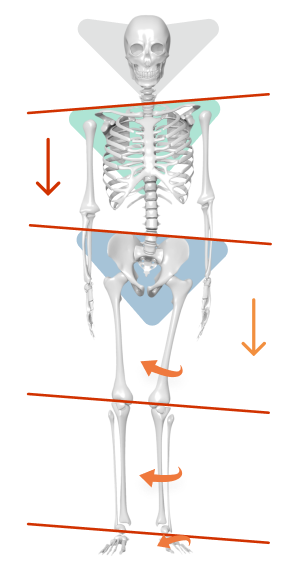
This powerful yet subtle work can help relieve disc compression, bulging or herniated discs, postural asymmetries, scoliosis, and chronic back pain—while improving mobility, circulation, and overall spinal health.
Developed by French osteopath Dr. Guy Voyer, ELDOA offers a customized approach: there’s an exercise for every level of the spine, from the base of the skull to the pelvis. Each posture trains your body to hold itself in better alignment, improving tensegrity (the balance of tension and compression that keeps your structure strong and adaptable).
With consistent practice—sometimes in just a few minutes a day—ELDOA helps you create space where there’s compression, balance where there’s asymmetry, and ease where there’s pain.


CONTACT ME
Have questions? I’m here to help!